Category Archives: Uncategorized

Catchment 29 – a wider perspective

Cuanbeo is a recently formed community based organisation with a mission of improving the quality of life, environment, economy and heritage in ‘Catchment 29’.  The group recently published a report (available here) on the economic assessment of the Marine Resources in southeast Galway Bay, the potential for growth and threats.

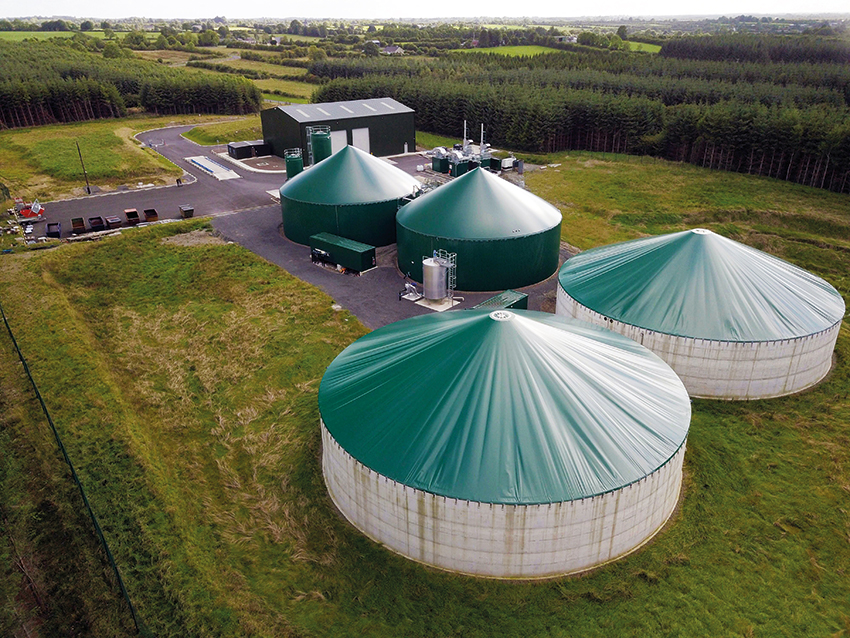
Here we look at a potential threat that hasn’t been explored- the proposal to build one of the largest Biogas plants in the country adjacent to one of the arteries feeding into inner Galway Bay. 

So what is Catchment 29?

Catchment 29 extends from Galway Docks for -117 km along the coastline to Blackhead in Co Clare. It extends inland to Athenry, Loughrea and Gort including the rivers and groundwater systems that enter the Bay. The report identifies that groundwater and surface water systems in the area are closely interlinked and highlights protection under the EU Habitats directive of areas within the catchment.

So why on earth would you site one of the largest Biogas plants in the country here given the potential consequences?
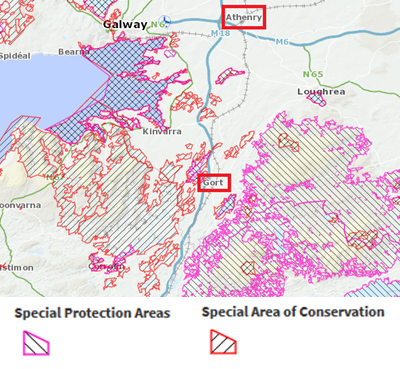
CSO map showing SAC & SPA areas around Catchment 29

Downstream effects

The report contains a case study (Case Study #3), covering a history of flooding and drainage around the Gort area, and highlights the importance of water quality entering the bay…” to the marine resources, and specifically aquaculture and fisheries in Galway Bay”. Maintaining water quality is identified as a major concern for any flood relief works being carried out. All of which are important points when trying to maintain and enhance protected and sensitive habitats.

Notwithstanding the devastating effects on the people of Gort, let’s take a look at the downstream effects of siting one of the largest Biogas plants in the country within Catchment 29.
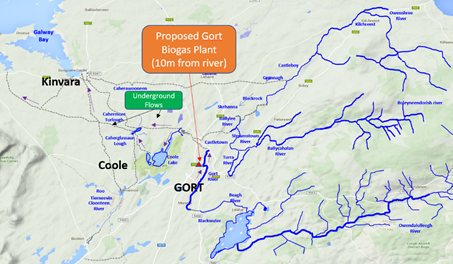
Interconnectivity of rivers and underground flows around Gort

The proposed development lies just 10m from the Gort river, one of the main arteries that feed into the Coole-Garryland SAC. This water, in turn, enters the sea in Kinvara Bay via underground flows. Any accidental breach or discharge could potentially result in tens of millions of litres of highly concentrated effluent entering directly into the catchment system, the impact of which would be disastrous both locally and downstream. In practical terms, a facility of this magnitude is a large scale chemical factory first and foremost. For the aquaculture sites, sensitive benthic communities and protected inter-tidal habitats downstream this would be catastrophic and has the potential to not only impact the local coastal economy (fishers, aquaculture sites and the blue economy) but also threaten the protected status of this unique area.

Given the credentials of the sister development in Ballybofey (Glenmore Biogas), its chequered history of ongoing mishaps and calamities (see the Brimstone cowboys), this is a ‘when’ rather than an ‘if’ scenario.

The facility also plans to connect to Gort’s wastewater treatment plant (WWTP), a facility already identified as operating at over-capacity, placing an additional and ongoing load on an already overburdened facility. Another red flag for maintaining water quality in the Coole-Garryland SAC.   

Joined up thinking

The purpose of the report, as defined by the group, is “…to establish a baseline economic value of the marine resources including ecosystem services associated with this catchment, to heighten awareness with policy makers and planners to the true value of the aquatic marine environment…”.

The role of the wider catchment is clear- ensuring the quality of freshwater input is a vital component to maintaining water quality in inner Galway Bay. Sourcing a Biogas plant of this magnitude in such close proximity to the Gort river cannot be justified given the potential consequences.

The report notes the proliferation of community led groups in recent years, as trust waivers in state agencies to provide the degree of protection expected by communities. As custodians of our local environment, the role of community led groups has never been so important in south Galway (see South Galway-an environmental powder keg)

Three years on and the threat of this development is still very much alive. The case is now in the hands of ABP with a decision pending. Let’s hope due consideration is given not only to the implications for the people of Gort but also the downstream consequences for Galway Bay.

South Galway – The Environmental powder keg

Update : Since the publication of this article An Bord Pleanala has refused the ESB Windfarm at Derrybrien substitute consent essentially making it an unauthorized development. ESB have agreed to decommission the windfarm. Between EU Fines and decommission costs will results in loss of 10s of millions of Euro to the Irish taxpayer.

With the recent flurry of climate change commitments, we run the real risk of enabling environmental malpractice and we should learn from lessons of the past from South Galway.

For a relatively small region, South Galway has become a national symbol of environmental malpractice based on ‘green’ developments. It is not just the controversial Derrybrien Windfarm that continues to garner the news but even more recently, a similarly green project (Gort Biogas Plant) has now been proposed. Both projects, through 20 years apart are giving An Bord Pleanála a bit of a nightmare. While long overdue, within the next month or so, An Bord Pleanála will have to make decisions on both of these projects and Europe is watching very closely. While these 2 development projects tick the ‘good for the environment/climate ‘ boxes, we are still paying harshly for the lessons of Derrybrien Windfarm development malpractice. Have An Bord Pleanála and our Government actually learned the lesson?

An Bord Pleanála and the Derrybrien Windfarm

Over 20 years ago An Bord Pleanála backed the application for the development of a Windfarm in Derrybrien Co. Galway and in some aspects went against Local Authority Decisions. Within 3 years, the plan became the focus of an unauthorized development and an environmental disaster; a landslide/mudslide that entered the rivers of South Galway and killed between 50,000 fish and deposited large amounts of sediment into the catchment. The local Derrybrien community had to engage with the European Commission as the ESB and Irish Government didn’t appear interested or supportive in resolving the situation.

In July 2008, the European Court of Justice ruled that Ireland breached the EIA Directive environmental directive as no assessment was carried out ahead of construction of the large-scale 70 turbine project. After an 11-year hiatus of non-action by ESB and the Irish Government, on 12th Nov 2019, the European Court then issued a €5 million fine and a €15,000 daily fine until a retrospective environmental impact assessment (rEIAR) and associated mitigations were complete. The ESB/local authorities finally got around to applying for a ‘substitute consent’ for the windfarm development in August 2020, supported by a rEIAR. This application and its rEIAR is currently with An Bord Pleanála for review and they need to make a decision imminently.

In the past few weeks, the EU fines have now accumulated to over €15 million and the EU Environment commission did its own analysis of rEIAR. Its advice was pretty stark “Based on the technical review of the rEIAR against the requirements of the EIA Directive, it is recommended that further information is provided before the consenting authority can make an informed decision on this application. “ (See more details here).

This was a warning shot to An Bord Pleanála (ABP). The EU Environment commission brought about the court action and are clearly signalling to the An Bord Pleanála that all is not well with the ESB approach. If An Bord Pleanála rejects the EU report recommendations, then they will be kicking a very expensive can down the road as the daily fine of €15,000 will keep accumulating. The ABP/ESB will likely be told to go back to the drawing board and the process will need to be kickstarted again – wasting millions of tax-payer money.

An Bord Pleanála and the Proposed Gort Biogas Plant

As if the windfarm wasn’t enough of a controversy, an application of a mega biogas plant in Gort, South Galway is now also up for review with An Bord Pleanála . The project itself is for a plant capable for processing 90,000 tonnes of feedstock and will produce 120,000 tonnes of waste – all located within a few hundred meters of Gort town center. This application has the same familiar markers as seen by the Derrybrien Windfarm project.

  • It’s a green project and therefore it must must be good for us
  • Its environmental impact assessments are full of holes
  • There is no engagement with the local community to address local concerns

The application got a stark and strong push-back from the local community with hundreds of objections. In January 2020, Galway County Council rejected the planning application for a wide range of reasons – mainly that it wasn’t convinced that traffic impacts and environmental impacts were identified and mitigated correctly. The following gives a very brief summary of the key reasons:

  • The proposed Biogas Plant is located within a 100m of residential areas and close to Gort Town Center
  • It’s 10m from Gort River which feeds a National Park (Coole Park) and Special Areas of Conservation (SACs) 4km away – another environmental disaster in the making…
  • It would cause traffic chaos around the town
  • Many serious errors in the EIAR that render the Environmental Impact Analysis void. (See more details)

An Bord Pleanála on their website state that they are independent, impartial with professionalism and integrity. They have the facts so you would likely conclude that they will not overturn Galway County Councils decision and grant permission within the next few weeks. However, could this decision be influenced by the current climate-change background?

Climate Change

The pressure is on and it all looks ‘Green’. Its on individuals and it’s on governments. Reduce our carbon footprints, invest in climate change strategies.

How the climate lobby crushed debate - spiked

A recent Farmer’s Journal article. highlights that “Producing feedstock for anaerobic digestion (AD) plants will be one of the key measures to reduce agricultural emissions by 2030 according to the Government’s Climate Action Plan.

Should we aim to implement our Climate Action plan ? Absolutely! But don’t throw the environment and communities and planning regulations under the green bus .

This is unfortunately exactly what happened with the Derrybrien Windfarm.

Will history repeat itself?

The Derrybrien Windfarm debacle has not been fully resolved – It’s been 20 years since An Bord Pleanála gave permission, 17 years since ESB kick-started an unauthorized development and 13 years since ESB first refused to do a retrospective mitigation. It was however, only yesterday we added €15,000 to the €15 million fine and we’ll do the same again today and tomorrow. We (not the ESB) are still paying the price for Environmental malpractice that was done 20 years ago.

One thing is clear, if An Bord Pleanála go against local Authority decision and grant planning permission for the proposed Biogas plant in Gort then once again South Galway Community may have to repeat history and rally and challenge the decision all the way to the European Court.

The following was a warning from GreenNews Ireland in Nov 2019 , on the announcement of the massive European fine:

This issue was deemed so severe that the Court took it into account when setting the high penalty for the State. The fines imposed should now act as a big wake-up call for our Government. If not, the next Derrybrien may be just around the corner and would again leave our natural landscape, our biodiversity and our citizens footing the bill for our ongoing failure to adhere to environmental law.

There is a big conflict here and there shouldn’t be. On ‘paper’ there shouldn’t be any chance that Galway County Council’s planning refusal would be overturned. An Bord Pleanála with it’s impartiality have all facts they need to make the right decision here. There remains, however, probably with the legacy of the Derrybrien Windfarm, a lack of trust to do the right thing.


David Murray

References :

A glimpse into our potential future

To meet the demands of social media, the reporting of news, good or bad, has to be a fast and efficient process. To that end, I’ve been tasked to write media statements for both a positive and a negative outcome in advance of the decision by ABP. At first, I thought this would be a fairly straightforward task but as I sit to write I’m projected into two diametrically opposed futures. As with any two-party decision, there are winners and losers. Here’s a glimpse into what the future could hold…

A negative outcome

One future scenario sees a negative outcome, where ABP grants permission and the development goes ahead, I see an entire community shell shocked. People meeting on the street, shuffling awkwardly, looking at the ground, long pauses in conversation not knowing what to say. A wake-like atmosphere, as people come to terms with what lies ahead of them, a daunting, uncertain future. The loss of a loved one or in this instance a loved and cherished thing, like a community and a town irreversibly changed. The people of Gort, the losers in this future scenario, will bear the burden for future generations to come. 

An entire community reminded of the decision every time they draw a breath and inhale the shitty, eggy smell that permeates the air as far away as our beloved Coole. Reminded every time, they leave one of our many fine pubs after a great night with friends and walk home backlit by the flame stack glowing like a North Sea oil rig, higher than our church spire and visible from every quarter. Reminded every time they have to squeeze hard and pull back on a child’s hand as they attempt to cross the road between another slurry laden tanker roaring through the town. Reminded every time of the once peaceful and serene Golden Mile and Riverwalk now framed by the country’s largest slurry plant a stone’s throw from the town.

In the other camp, champagne corks pop and a few people celebrate their victory. The green light, the go-ahead, the all-clear. Excited plans are made for expensive foreign holidays, perhaps a new car or a second or even third holiday home. We won, we got one over on them, we duped the whole town. The celebration of a few to the detriment of many.

It has taken some time to write these words, for no reason other than it’s a future that’s worrying. The celebration of a few to the detriment of many.

A positive outcome

An alternative future scenario sees a positive outcome, where ABP upholds the decision of Galway County Council and permission is refused. The development is refused, quashed, flattened, a dead duck. People cross the road to confirm the news, phones are checked, messages sent. Can it be true? After a three-year fight, is it gone? Can we now move on? Corks are popped that evening, happy smiles all around. Plans are underway, a party, a celebration, a celebration of the power of people. The people of Gort, a steadfast community galvanised into action, not for personal financial gain but for the benefit of all. I can see the party in my mind’s eye, music on the riverwalk on a summers evening, laughter and chatter permeate the air, not an acrid eggy smell.  

These words flow easily, this is the future we want to see.

For now, we will have to wait for ABP to decide our fate. Let’s hope it’s for the benefit of many not the few.

Rude awakening on Biogas plant investments

Green energy – Airport World

The developers behind the Gort Biogas plant are having some interesting financial dynamics recently. Glenmore Generation Limited (GGL), the developers of the Biogas Plant in Ballybofey, the sister company of Sustainable Bio-Energy Limited (proposers of the Gort Biogas plant) has secured permission to waive £37 million in loan repayments due to its funders in a major restructuring plan after recording a pre-tax loss of £23.6m in 2019. According to a report the accounts reveal value of the Ballybofey plant and machinery was devalued by around £16m between the end of 2018 and 2019.

The Glenmore plant was initially set up in 2016 to turn 25,000 tonnes of poultry litter from Northern Ireland each year into energy, supplying power to manufacturers including Bombardier and Montupet. Glenmore Generation Limited, contracted an Engineering firm Williams Industrial Services (WIS) to build the plant but in 2018, the engineering firm went into administration after cash problems caused by a contractual dispute involving a £23m project in Donegal.

The Gort Biogas Proposal is centered on feeding mostly silage to the Biogas plant which compared to food or poultry waste is an extremely costly raw material to feed biogas plants. This should certainly cast a shadow of doubt over the viability of the proposed Biogas Plant in Gort, which maybe is not quite as ‘Sustainable’ as their name suggests

Gort Biogas….the long and winding road

As we run down the clock to the 30th April, the decision due date of An Bord Pleanála on the proposed Biogas development in Gort, now perhaps is a time to reflect on the journey so far.

Three years ago, the first application was lodged by the developers with Galway County Council. The development, the largest of its kind on the Island of Ireland, was news to most people in Gort and few knew about it. However, the fire was well and truly lit during a public meeting of the Burren Lowlands Group. A concerned resident stood and addressed the room about what they thought was at stake for the towns future, its people and the environment. The battle lines were drawn and elected representatives were asked to nail their flags to the mast.

A period of quiet followed and some pondered would the people of south Galway simply allow this development to go ahead? Not a chance, the people of Gort were merely drawing breath and a groundswell of support was building. The Gort Biogas Concern Group was formed and through a series of public meetings and media campaigns the public were informed as to what the future might look like should this facility go ahead.

From the developer, we saw multiple serpentine twists and turns before a decision by Galway County Council to refuse planning, in January 2020. The thread that runs consistently throughout is that Biogas facility of this magnitude in Gort stinks, much like the sister facility in Ballybofey, Co. Galway, just ask the locals!

As in life, things work in strange ways and a global pandemic acted to strengthen the resolve of people against this development as we were all asked to stay local.  I think we all have a newfound appreciation for how lucky we are to live in south Galway and appreciate all the more the renewed sense of community.

There is simply too much at stake for the people of south Galway for the benefit of a few private investors.  So, we await the decision by An Bord Pleanála and hope that they uphold the decision of Galway County Council. Hopefully, we can soon resign this fiasco to the history books, remembered only in the Biogas song.  Regardless of the outcome, if necessary, the Biogas Concern Group will continue the fight until the job is done.

The decision date by An Bord Pleanála is the 30th of April.

Gort Biogas Resistance Flairs

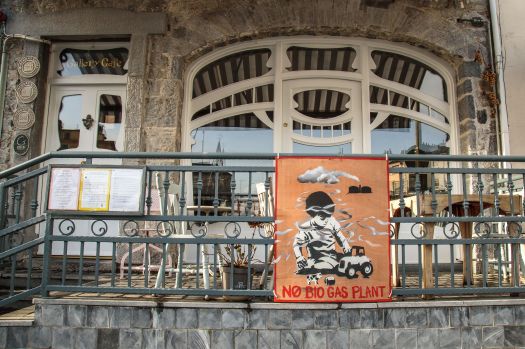
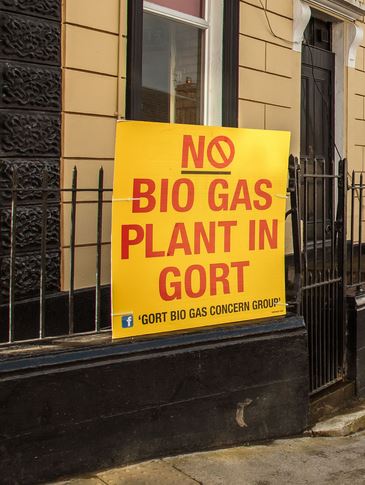
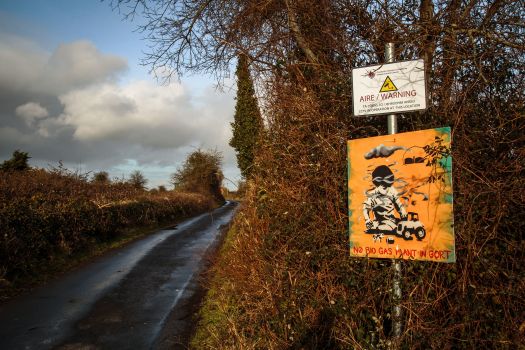
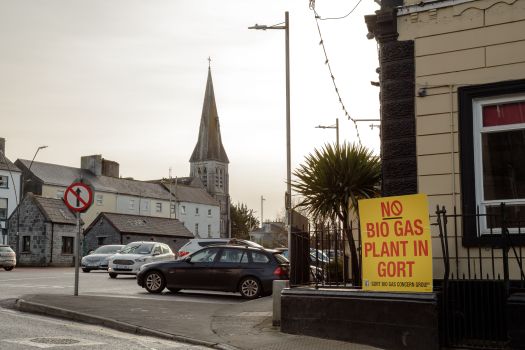
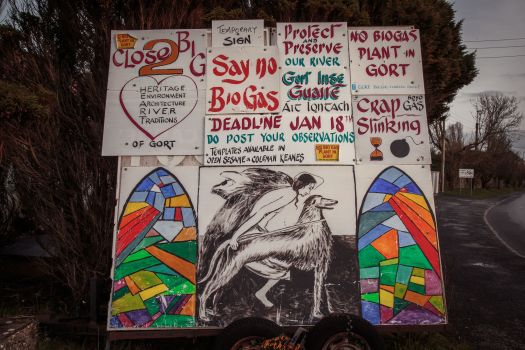
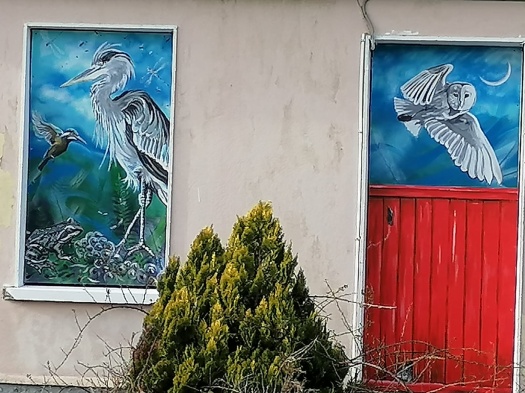
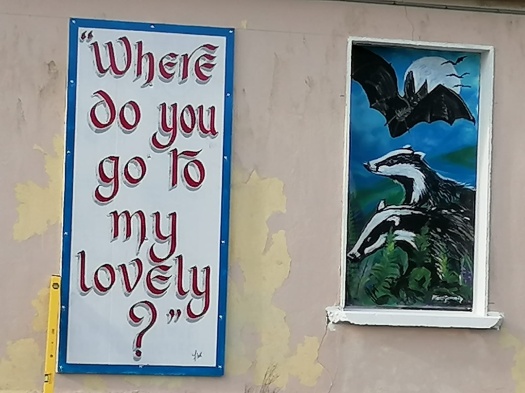
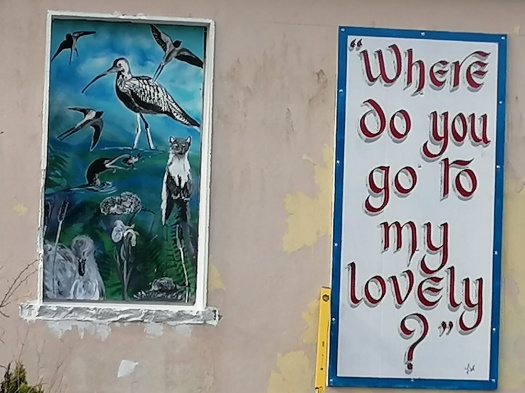
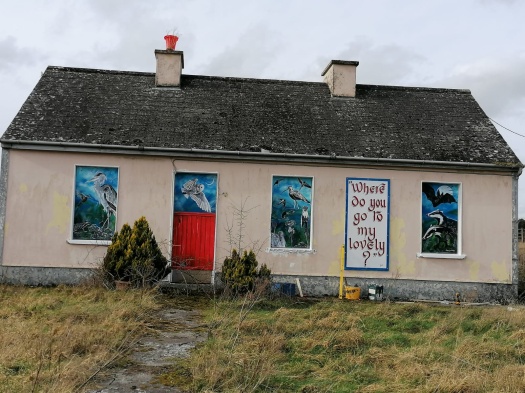
The people of Gort, restricted in their ability to meet publically, continue to voice their opposition of the proposed biogas development through an art and poster campaign.  The heritage status of the town shines through with contributions from local artists and wordsmiths alike. Themes stretch from hard hitting images what the future might look like should the development go ahead, to the proud local history of the area and the importance of the local environment. Thrown in for good measure are the words of the local hero and pillar of 20th-century Irish Literature W. B. Yeats.

A painted house… down Kinincha Way

Poetry Protest!

We have our own portest poem Gort Biogas Plant vs. W.B Yeats from Leo Smyth

Biogas Begone!

A song from local Legend Niall Finnegan! (Lyrics from Richard Joyce and Niall!)

“This just shows that the resolve of the people in South Galway holds true. Too much is at stake for the people of Gort and the fragile local environment to let this development go ahead.  The impact and legacy of this development on the entire area weighted by the economic benefit to a few private developers is simply too much to ask the people to bear. One thing the global pandemic has taught us is to value our local surroundings. Local amenities such as the Gort River Walk have been a lifeline during these times.

The people of Gort fully support the decision of Galway County Council to refuse planning permission for this development and it is hoped that An Bord Pleanála uphold this ruling.

On behalf of the Gort Biogas Concerns Group, I would like to thank everybody for the support we are getting – from the artists to the sign-hangers, to the people and businesses who have supported us in our mission to stop this disastrous development

Ciaran O’ Donnell, Chair Gort Biogas Concerns Group

An Bord Pleanála’s decision is due on April 20.  

Galway Green Party Opposes Gort Biogas Proposal

The proposed Biogas Plant at Gort is very close to the Gort River and Town

The Galway Green Party lodged a submission in support of Galway County Council’s decision to refuse planning permission for the application to build a Biogas plant in the outskirts of Gort.

Aonghus Kelly from the Galway Greens stated that “The Green Party has consistently been in favour of sustainable solutions to Ireland and Galway’s energy needs in order to provide a better, safer, cleaner Gort, Galway and Ireland for all our citizens. Biogas can and should form part of the solution. However, sadly this application is far from that aim.

Frank Farrell also from the Galway Greens stated that “A flawed decision now to allow this plant would damage the town of Gort, its hinterland and cost the state and therefore her citizens large amounts of money in years to come.”

“If the Galway Green Party doesn’t support the development of a supposedly ‘Green Plant’ then it just shows the flaws in the overall proposal. “, said Ciaran O’ Donnell of the Gort Biogas Concerns Group. “Were this plant to go ahead it could have a detrimental impact on the people of South Galway, and the wonderful natural environment we live in”

The decision by an Bord Pleanala on whether or not to grant planning permission will be made in April this year.

Gort Biogas Plant vs. W.B Yeats

Wild Swans at Coole : Photo Deirdre Holmes

Mr W.B. Yeats pens a protest to the proposed biogas plant at Gort

I walked again those roads I used to see
By Coole, Kiltartan, on to Ballylee
Around, green boughs of hazel and of ash;
I thought this place was safe in the State’s care
So thought we of the Amazon – none would dare
Destroy those trees for lumber or for cash.

Here we face danger of a different sort
A planning application near the town of Gort
Presents a risk to water and to air
Twelve hundred metres from the turlough where
Upon that brimming water by the stones
I counted nine-and-fifty swans.

Was it for this that precious gift
Of nature and the gardener’s skill
On waves of chance be set adrift
With doubt of its survival still;
For this the wild bees murmur stilled,
And grassland orchid-rich no more,
Trees die with bounty unfulfilled
Squirrels grow thin, bereft of winter’s store

What need you, being men and women of good sense
A bunded tank farm with a lofty stack
Gort river walk delights without a fence
To bound the vision of Kinincha and Glenbrack
I had thought no one but a fool
Would threaten all the land from here to Coole.

Did not Ireland and Europe both decree
this is a special place we must conserve
precaution must insist that it stay free
of risk; we ask the planners vision will not swerve
but hold that what’s passed down must be passed on
the scientist and poet speak as one.

The turloughs of Raheen and Garryland
Of Lydacan, the Crannaghs and Hawkhill
Are independent of the human will
And need no guidance from a human hand
Yet as their crystal waters rise and fall
They cry out for protection from us all

A voice proclaims in our unquiet dreams
Tread softly because you tread on my streams

© Leo Smyth 2020

An Bord Pleanála submissions…..what you need to know

Your opinion is incredibly powerful so if you want to add a submission put pen to paper and voice your concerns direct to ABP

Deadline for receipt of submissions

Deadline is the 22nd January…so please allow sufficient time for postage especially with potential Covid Impacts

You will need to include in your submission:

  •   Case reference: APB-308942-20                     
  •   Submission cost is €50.00 (Cheque, postal order or cash (though not advised by Post))
  •   Your contact name and address

Send your submission to:

  The Secretary, An Bord Pleanála, 64 Marlborough Street, Dublin 1, D01 V902

Multiple Submissions

For local businesses, community groups, friends and neighbours why not submit together ? Simply sign, add your contact details and multiple templates can be submitted together in the same envelope for a single €50 fee

Templates

A template is available for download below, but this time we need your voices to be heard and not just our template.

Final decision by the Bord: 30th April, 2021

Thank You!

Gort Biogas Developers turning a blind-eye to traffic concerns

Galway County Council has refused planning permission to the Biogas developers citing many reasons, one of which relates to concerns over traffic. The Biogas developers have come back and appealed the decision.

We think they have a blind-spot when it comes to traffic analysis.

Information Requests and planning Decision:

Even at the pre-planning meeting between Developers and Galway County Council on 9th April, 2019, Galway County Council made 2 important points:

  • Any Proposals involving HGV Traffic through the town centre will be highly problematic.
  • All issues highlighted in the FI (Further information) Request Issued under 18/502 should be addressed in full

Basically on the first application there was  a lot of information missing, so Galway County Council issued an RFI, that contained many requests including the following:

  • “The applicant is required to submit a revised EIAR to include an assessment and evaluation of the feedstock to serve the proposed development, which should include the type and locations of all the feedstock sources to supply the proposed biogas plant.”
  • “Please submit the locations of all feedstock sources to serve the proposed development and highlight the likely haul routes to be used to and from the development based on realistic travel times.”
  • “The likely haul routes should be broken down in the percentages, in order to obtain a clear understanding of the traffic implications of the proposed developments on Gort town.”

The applicant has covered Traffic Assessments in their EIAR but not completely.

Traffic Concerns

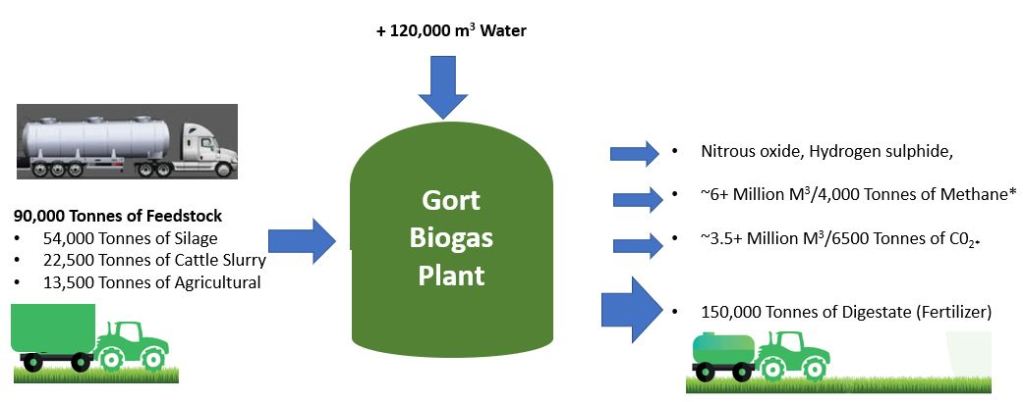
The proposed Biogas plant will require 250,000 Tonnes of material to be managed per year.  90,000 Tonnes of input (Feedstock) , 150,000 Tonnes of Digestate (fertiliser) and 5,000-10,000 tonnes of C02/Methane.  This simple diagram shows the process.

All of this material will need to pass through Junction 16, (Glenbrack Roundabout) in Gort as it’s the only exit/entry point allowed. As this is also a motorway exit/entry point there are as many concerns about this, as there are about routing traffic through Gort.

Errors and Inconsistencies

When looking at traffic numbers there are 2 tables in the EIAR document that state different traffic rates – no idea which one they deem is correct so this doesn’t exactly fill us with confidence.

No Seasonal Variations

The traffic assessments give a daily average for the year e.g.

  • delivering feedstock (e.g. silage)  10 vehicles/day .. Peaking to 11!
  • Collecting digestate ( 11 vehicles/day)

But this doesn’t take into account the seasonal nature of the feedstock or digestate.

Feedstock Delivery

The EIAR emphatically states that “no feedstock deliveries will be made using tractor hauled slurry type tankers” – that however, only applies to slurry – not to silage, so we assume, like most Biogas plants, that it will be tractor and trailer for delivery of silage. We also assume that delivery will be somewhere between 12 and 20 tonnes so an average of 16 tonnes per load. For silage, 54,000 tonnes will have a specific peak wndow, usually May-Sept of around 4 months.

These kinds of tractor/silage trailers are common modes of silage feedstock transport

Note : The EIAR also doesn’t answer Galway County Council’s original request for more information on feedstock suppliers, routes.

Digestate Collection

150,000 tones of digestate are predicted to be collected from the Biogas plant. We are assuming that the collection will be done by Tractor with Slurry tanker (see image below)

In the applicant’s EIAR they state:

“In terms of storage capacity, the volume of storage should be guided and sufficiently sized to cater for digestate production between the period mid-October to mid-January (approximately 20 weeks depending on location within the  country and weather conditions).”

So from Mid-January, there are 32 weeks in which to  collect and deliver 150,000 tons of digestate to farms in the vicinity.

150,000 tons in 32 weeks is an average of 34 x 20 tonne Tractor Trailer loads a day so again we could imagine a peak of 3-4 times this and 100 tractors per day would not be unreasonable for a few weeks during peak collection. (Jan/Feb) This contrasts starkly with their proposed 17 vehicles per day.

Easiest way to spread digestate is to collect with Tractor and trailer and apply directly on land.

Ambiguity on Routing traffic through Gort Town

This is the main blind-spot that the biogas developers have.  They have an inability to conceive traffic going through Gort Town.

“TRSA have been informed that hauliers making deliveries related to the proposed development will be contracted to enter the site from the south via the M18 motorway junction 16 to the north of Gort, and via the R458 regional road from the motorway junction to the site access. TTRSA have also been informed that no feedstock deliveries will be made using tractor hauled slurry type tankers and that no feedstock deliveries will be routed through Gort town centre.”

Did you see the blind-spot? Even though Galway County Council have highlighted to the developers that trafffic through Gort would be a major consideration regarding planning – they have completed ignored the 150,000 tonnes of digestate that need to be collected from the site.

Conflict at Glenbrack Roundabout (Junction 16)

It was the key item highlighted in the pre-planning meeting – concern over traffic through Gort town centre and traffic at Junction 16/Glenbrack roundabout.

Glenbrack Roundabout (Junction 16) will be used for all Biogas traffice

This roundabout would be used by every vehicle going to/coming from the factory so

  • 100 tractors carrying digestate +
  • 80 tractors + trailers carrying silage
  • 20 tankers carrying slurry
  • 4 tankers for Methane +
  • 4 Tankers for C02 +

These are not unreasonable numbers during a few peak weeks. All of these will pass the Glenbrack roundabout twice.   Over a 12 hour period – this would be an average of a Biogas-related vehicle every 1 minute 43 seconds at Glenbrack Roundabout spread evenly throughout the day.. Which won’t happen that smoothly of course. 

Feeding the Biogas Beast

The biogas plant will be an unpredictable beast to feed and to dispose of its digestate.   There will be peaks in demand for feedstock and digestate but the proposers EIAR is not really considering peak. The Biogas developers have a blind-spot regarding offering any consideration on digestate disposal – It’s like they don’t want to be in any way responsible for its disposal and have offered no insight into how the 150,000 tonnes will be distributed .

Galway County Council have been very clear in highlighting traffic concerns and requested some key data to make proper traffic assessments.   The Biogas Developers (and Halston (https://halston.ie/portfolio/biogas/) have turned a blind-eye on the request – so ..from our point of view, the refusal is well justified.

Recap summary :

  • There are inconsistencies in the PCU numbers in Traffic Analysis
  • The EIAR fails to provide the detail of information previously requested by Galway County Council
  • The EIAR fails to consider seasonal demands of both feedstock and digestate
  • The EIAR does not provide any analysis of traffic through Gort Town Centre which will be likely during digestate disposal to lands in vicinity of biogas plant
  • The EIAR does not prohibit tractor-based haulage of feedstock (Silage Trailer) and digestate (slurry tanker) and these are common modes of haulage for other biogas plants
  • Based on seasonal variation and smaller loading profiles, it is not unreasonable to assume that there could be over 200 vehicles/day visiting the Biogas plant
  • The applicatns EIAR does not address traffic concerns adequately and is a reaonsable grounds for refusal of permission